
Leveled Readers Made My Kid Look Like a Reader — But He Couldn’t Actually Read
He was breezing through Level B books. I thought, “Wow, he’s really getting it!”
Then I handed him a word he hadn’t memorized yet: map.
And he had no idea what to do.
Turns out, he wasn’t reading — he was guessing.
That’s when I discovered decodable books, and let me tell you: total game changer.
If you’re wondering how to actually help your child learn to read (without memorizing or faking it), you’re in the right place.
What Are Decodable Books?
Decodable books are written using the exact letter sounds your child has already learned. They’re meant to be read — not guessed.
Example:
If your child has learned the short vowel a and consonants like m, s, t, p, the book might say:
“Sam sat. Tap, tap. Sam naps.”
These aren’t random sentences — they’re carefully designed so your child can decode every word. That means they’re actually reading, not just memorizing or filling in the blanks with pictures.
What’s the Problem With Leveled Readers?
Those books labeled Level A, B, or 1, 2 look like they’re helping, but they often do the opposite for beginning readers.
Why?
- They include words your child can’t yet sound out
- They encourage kids to guess based on pictures
- They reward memorizing, not reading
Real example from a Level B book:
“I see the hippopotamus.”
Your 5-year-old hasn’t learned to read hippopotamus — and that’s okay! But when that word shows up in a “beginner” book, it sets them up to fail or guess.
Why Decodable Books Actually Help Kids Learn to Read
Decodable books:
- Match what your child has been taught
- Build confidence (“Hey, I can read this!”)
- Strengthen real reading skills: sounding out, blending, and recognizing patterns
- Help kids feel successful — even if they’re just starting out
It’s like training wheels for reading. They give your child the support they need before jumping into harder books.
What This Looks Like in Real Life
Let’s say your child knows these letter sounds:
a, m, s, t, p
You’d grab a decodable book with short vowel a and those consonants. Inside, you might see:
- Pat sat.
- Sam taps.
- Mat sat at a map.
Every word can be sounded out.
No guessing.
Pure confidence-building.
Easy Ways to Use Decodable Books at Home
Here’s how you can make the most of decodable books — even if you’ve got 10 minutes between dinner and bedtime:
1. Tap It Out
Have your child touch one finger for each sound in a word:
“/s/ /a/ /t/ — what’s the word?”
Sat!
2. Read & Build
After reading a word like nap, build it together with magnetic letters. Then switch one sound:
“What if we change the n to an m — what’s the new word?”
Map!
3. Echo Read
You read the sentence:
“Sam sat.”
They repeat it. Then you try it together.
4. Silly Voices
Robot voice, whisper voice, monster voice — anything that makes rereading fun.
Where to Get Decodable Books
You don’t need a whole curriculum — just a few good decodable books that match your child’s current skills.
Try These:
- Word Family Kindergarten Readers (Teachers Pay Teachers)
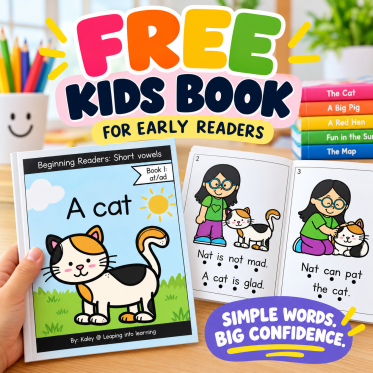
Perfect for short vowel practice and CVC words (cat, dog, nap, etc.) - Free printable book
I have one! — download and print it to use tonight. - Look for books that say “decodable” — not “Level A” or “Beginning Reader.” Check the first few pages: if your child knows the sounds, it’s probably a good fit.
How to Tell If a Book Is Decodable for Your Child
Ask yourself:
- Does my child know all the sounds in the words?
- Can they sound out the words without guessing?
- Are there too many tricky or “sight” words on the page?
- Do they feel confident after reading it?
If the answers are mostly yes, you’ve found a winner.
Final Thoughts
Reading isn’t about racing through levels. It’s about learning how written words work — and building skills slowly and confidently.
Leveled readers look like progress, but they can mask the truth:
Your child needs to learn to decode before they can truly read.
That’s what decodable books do best.
So don’t worry about moving up the levels. Worry about moving your child forward — one sound, one word, one proud little reader at a time.



Leave a Comment
You must be logged in to post a comment.