

Let’s talk about how to help your first little readers build a strong foundation for reading—one that’s backed by science, easy to support at home, and honestly kind of fun.
If you’re thinking, “I’m not a teacher. I have no idea what phonemic awareness is,” don’t worry—you’re in the right place. As a mom of four and a former teacher of 15 years, I’ve got you.
Let’s make this simple, doable, and fun. And it starts with something you can do right now with zero fancy tools: Playing with sounds in words.
What is Phonemic Awareness? (In Words That Actually Make Sense)
Phonemic awareness is just a fancy term for your child’s ability to hear and work with individual sounds in words. You’ll also hear it called:
- Playing with sounds in words
- Sound awareness
- Listening for sounds in words
- Breaking apart and putting together sounds
There are no letters involved here—just listening and talking. It’s all about what your child can hear and say.
Example:
- If you say, “What’s the first sound in the word dog?” and your child says /d/—that’s phonemic awareness!
- Or if you say, “What word do you get if you blend /c/ /a/ /t/?” and they say cat—you’re building a reader!
This kind of sound awareness is one of the biggest predictors of reading success. It helps children become confident decoders, and it sets them up beautifully to connect those sounds to letters—that’s where phonics and phonemic awareness come together.
Phonological Awareness vs. Phonemic Awareness (And Why It Matters for Little Readers)
Let’s break this down (without making your head spin):
- Phonological awareness is the big umbrella—it includes all kinds of hearing and playing with sounds: rhyming, clapping syllables, noticing beginning and ending sounds.
- Phonemic awareness is one part of that umbrella—specifically, the part that focuses on the smallest units of sound in words (called phonemes). Think: changing the /m/ in mat to /s/ to make sat.
For first little readers, both are important—but phonemic awareness is especially powerful when it comes to getting ready to read and spell.
Why Sound Awareness Is the Secret Sauce for First Little Readers
Before a child can read the word bat, they need to be able to:
- Hear that bat has three sounds: /b/ /a/ /t/
- Break it apart
- Put it back together
That’s what breaking apart and putting together sounds looks like.
The truth? If kids skip this step or don’t get enough practice with it, reading gets a lot harder later. But if we give them regular practice—just a few minutes a day—we set them up for confidence and success.
How Heggerty Phonemic Awareness Helps in Kindergarten (And What You Can Do at Home)
If your child’s teacher has mentioned Heggerty phonemic awareness or Heggerty kindergarten, this is what they’re working on—quick daily routines that help children hear and manipulate sounds.
And while Heggerty is designed for classrooms, the ideas behind it are so easy to bring into your home—even without the full program.
These routines don’t require flashcards, worksheets, or screens. All you need is your voice and a few minutes.
Let’s look at how to do that…
Easy Sound Awareness Games to Play at Home
These quick and playful activities help your child get comfortable playing with sounds in words—no materials, just sound fun!
- Sound Awareness Warm-Up
Say a word like sun. Ask, “What’s the first sound you hear?” Your child says /s/. Boom.
Next level: “What’s the last sound in sun?” /n/ - Clap the Syllables
Say: “el-e-phant.” Clap once for each part. Try “base-ball,” “pa-ja-mas,” “pop-si-cle.”
This builds phonological awareness and gets them tuning in to sounds. - Rhyme Time
Pick a word like cat and ask: “What rhymes with cat?” Hat. Mat. Flat. Silly made-up words are welcome too! - Sound Swap
Say: “The word is mat. Change the /m/ to /s/. What’s the new word?” (sat)
This is awesome for phonemic awareness kindergarten and beyond. - Blend the Sounds
Say: “/c/ /a/ /t/ — what word do those sounds make?” Have your child blend them together: “cat.”
Then you can say, “Yes! That’s how we break apart and put together sounds!” - Take a Sound Away
Try: “Say flag. Now say it without the /f/.” (lag)
Sneaky brain work—but so powerful.
These little games are how you build strong first little readers—right from your kitchen, car ride, or couch.
How Phonics and Phonemic Awareness Work Together
Once your child is confidently hearing the sounds in words, we start connecting those sounds to letters. That’s what phonics is all about.
So:
- Phonemic awareness = hearing and working with the sounds
- Phonics = matching those sounds to letters
We don’t skip the sound step—it’s the bridge that makes reading possible. That’s why phonics and phonemic awareness go hand-in-hand, and why sound awareness needs to come first.
You’ve Got This: Helping Your First Little Reader Starts with You
You don’t need to be a teacher. You don’t need fancy flashcards or apps. You just need:
- Your voice
- A few minutes
- A playful attitude
Seriously—5 minutes a day of playing with sounds in words can make a big difference.
Celebrate the little wins:
“You heard that /m/ sound in mat! You are getting SO good at this!”
And remember: mistakes are part of learning. You’re helping your child grow their brain and build their confidence.
Final Thoughts: Little Sounds Build Big Readers
So, to wrap it all up:
If you want to support your first little readers, start by helping them hear the sounds in words. Use your voice. Play silly games. Keep it light and fun.
This work might seem small, but it’s actually huge.
It’s how we build strong readers—one sound at a time.
You’ve got this. And I’m right here cheering you on.
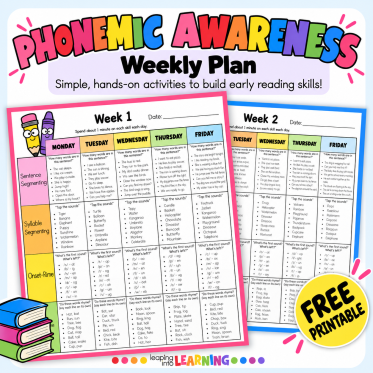
Make sure to download the phonemic awareness freebie below!




Leave a Comment
You must be logged in to post a comment.