When you’re helping your child learn to read, it can feel like you need ALL the things: special games, apps, flashcards, workbooks, and approximately 47 reading activities saved on Pinterest.
You really don’t.
Some of the best reading tools are surprisingly simple, and choosing the right kids books matters just as much. A whiteboard, sticky notes, word mapping, letter tiles, and books your child can actually read can give you plenty to work with in about 10 minutes a day.
And if you’re searching for dyslexia reading tools, you don’t necessarily need fancy supplies. What matters most is how you use them. We want kids hearing sounds in words, connecting those sounds to letters, blending words, spelling, and practising with books that match what they’ve been taught.
Here are some of my favourite reading tools and kids books for beginning and struggling readers.

1. Whiteboards
A small whiteboard is one of my favourite reading tools because kids can write, erase, change something, and try again without worrying about mistakes.
Use it to:
- practise letter sounds
- build simple phonics words
- spell words by listening for each sound
- change one sound at a time
- practise a new phonics pattern
Try writing:
- map → mat → sat → sit
- After each change, ask, “What sound changed?”
Your child has to listen to the word, figure out which sound changed, connect that sound to a letter, and then read the new word. Simple activity, BIG reading work.

2. Sticky Notes
Sticky notes are another ridiculously simple tool that kids somehow find much more exciting than regular paper.
Write words your child can read on individual sticky notes. If they’re practising short a, you might use cat, map, sat, tap, and pan.
Have your child read each word before they move it, sort it, find it, or stick it somewhere silly.
The fridge? Fine. The couch? Sure. Their forehead? Obviously.
The important part is that they’re looking at the letters and reading the word, rather than guessing from a picture or trying to memorize what the whole word looks like.

3. Word Mapping
Word mapping sounds complicated, but the idea is actually really simple: your child listens for the sounds in a word and connects those sounds to the letters that spell them.
Take the word ship. Your child can:
- say ship
- listen for the sounds: /sh/ /i/ /p/
- connect the sounds to the letters: sh – i – p
- write ship
- read the whole word again
This helps kids understand how words work instead of trying to memorize every word like it’s a picture.
That’s also important when we talk about sight words. We want words to eventually become automatic, but that doesn’t mean kids need to memorize hundreds of words by their visual shape. Helping children connect sounds to spellings gives their brains a much better way to learn words.
Less guessing. Less memorizing. More understanding how words work.
Dyslexia Reading Tools: What Should Parents Look For?
If you’re searching for dyslexia reading tools, focus less on fancy products and more on what the activity is actually asking your child to do.
Helpful dyslexia reading tools should give kids practice with skills like:
- hearing individual sounds in words
- connecting sounds to letters
- blending sounds to read words
- breaking words apart to spell them
- practising phonics in a clear sequence
- reviewing skills they’ve already learned
- reading books that contain phonics patterns they’ve been taught
That’s why simple tools like whiteboards, letter tiles, word mapping activities, and decodable kids books can be so useful.
What we don’t want as the main strategy is asking kids to memorize long lists of words, guess from pictures, or look at the first letter and figure out what would make sense.
We want to teach them what to do when they don’t know a word.

4. Decodable Kids Books
When your child is learning to read, the kids books you choose for reading practice matter. Decodable books are written around phonics skills children have already learned. This means your child gets a chance to actually use those skills instead of constantly running into words they aren’t ready to read.
If your child has learned basic letter sounds and short vowels, for example, their book might include words such as:
- cat, bed, sit, hop, cup
They can look at the letters, say the sounds, blend those sounds together, and read the word.
That’s real reading practice.
Books for 5 Year Olds and Books for 6 Year Olds
If you’re searching for books for 5 year olds or books for 6 year olds, don’t choose a reading-practice book based on age alone.
Choose by skill first. Age can be your secondary guide.
Two six-year-olds might need completely different kids books. One could still be learning letter sounds while another is ready for more complicated spelling patterns.
Instead of only asking, “What should my 6-year-old be reading?” ask:
What can my child read right now without guessing?
Start with what they know. Build what comes next.

5. Magnatiles or Letter Tiles
If you already have Magnatiles covering your floor, congratulations—they can officially become reading tools.
Use Magnatiles, magnetic letters, or simple letter tiles to build words and change one sound at a time:
cat → cap → map → mat
Have your child read the word after every change.
You can also use them to build phonics words, practise beginning and ending sounds, compare similar words, and work on new spelling patterns.
It feels like play, but your child is learning that changing the letters changes the sounds—and that understanding is a big part of learning to read.
Kids Books: Free Books, Decodable Books & Picture Books
You don’t need to fill your house with hundreds of kids books. For children learning to read, I like having two types: decodable books for reading practice and picture books for reading together.
Decodable books let kids practise the phonics skills they’ve already learned, while picture books build vocabulary, comprehension, and a love of stories. Both are important—they just have different jobs.
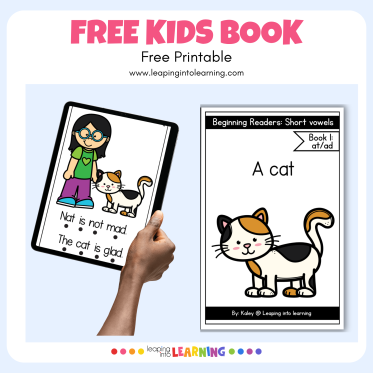
If you’re looking for free books for kids, you can grab my FREE beginner reading books here. You can also find free kids books online through Flyleaf Publishing’s decodable e-book library.
When choosing books for 5 year olds or books for 6 year olds, don’t worry too much about the age on the cover. Choose books based on what your child can actually read. Start with what they know. Build what comes next.
Keep Your Reading Tools and Kids Books Simple
You don’t need a huge collection of supplies or hundreds of kids books to help your child learn to read.
A whiteboard, sticky notes, something to build words with, word mapping activities, decodable books, and great picture books give you plenty to work with.
And if you’re searching for dyslexia reading tools, remember that the fanciness of the tool isn’t what matters. What matters is giving your child clear practice hearing sounds, connecting them to letters, building words, and reading books that match their skills.
The harder part for most parents isn’t finding another reading tool or kids book. It’s knowing:
- What should I teach first?
- What should I say when my child gets stuck?
- When should we move on?
- What comes next?
That’s exactly why I created my reading program.
Instead of piecing together random activities and wondering whether you’re missing something, you get a simple, science-backed plan that shows you what to teach, what to say, and what comes next—in about 10 minutes a day.
You bring the kid. I’ll bring the plan.