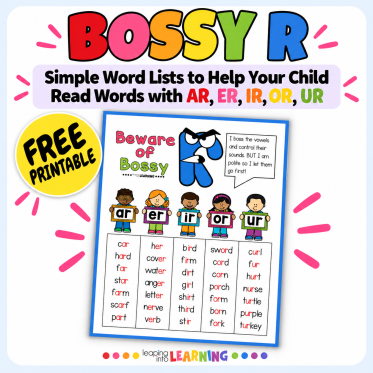
If your child is learning to read, they may hit a bump when it comes to R sounds — especially those tricky R controlled vowels. You might hear them say “c-ar” like “cat,” or mix up words like “bird” and “burd.” That’s because when R comes after a vowel, it changes the sound completely. We call this Bossy R, and while it can be confusing at first, with a few simple steps (and a lot of encouragement), you can absolutely teach this at home. (I’ll show how!)
Whether you’re working on R words for speech, decoding skills, or overall reading confidence, this post will walk you through exactly how to teach AR words, ER words, IR words, UR words, and OR words in a way that feels doable — even with a busy schedule.
What Are R Controlled Vowels?
Let’s start from the beginning.
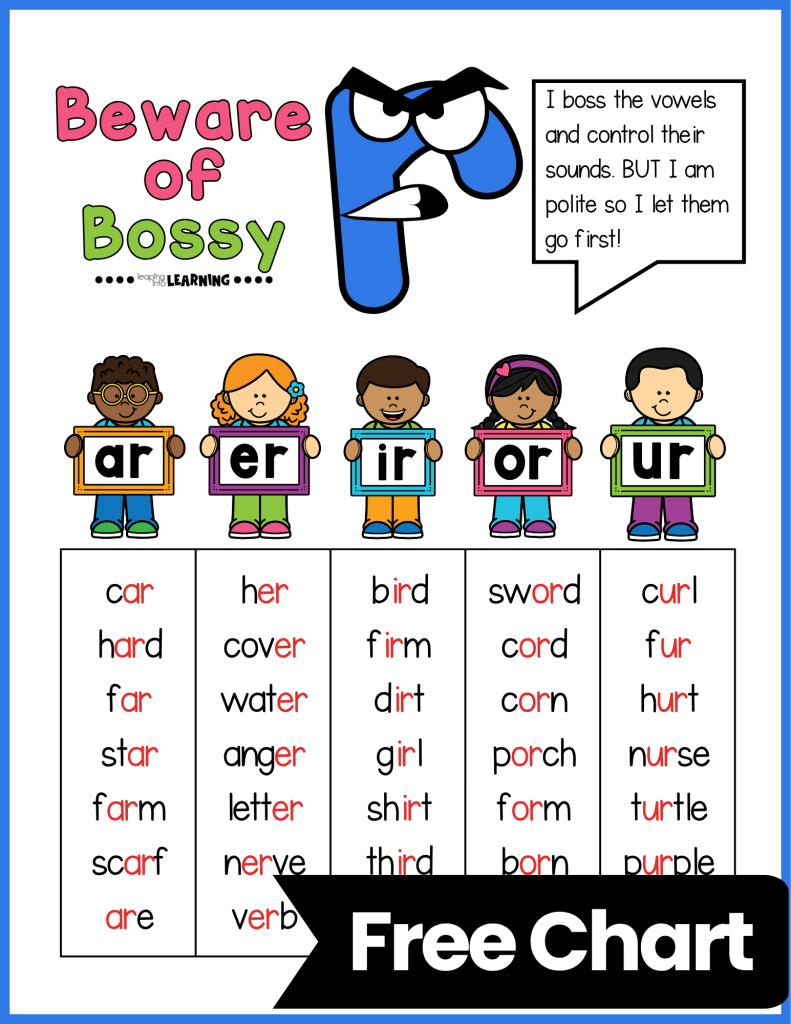
When a vowel is followed by the letter R, it doesn’t make its usual short or long vowel sound. The R controls the vowel and changes the way it sounds. That’s why we call it Bossy R.
Here are the five most common R controlled vowel patterns:
- AR words – like car, star, shark
- ER words – like her, fern, butter
- IR words – like bird, stir, shirt
- UR words – like fur, nurse, curl
- OR words – like fork, corn, storm
Even though ER, IR, and UR look different, they usually make the same sound: /er/, like in “her.” That’s part of what makes these R sounds a little tricky to learn.
How to Teach Bossy R at Home: Step-by-Step
This method is simple, structured, and designed for parents — no teaching experience needed. You can spend just 5–10 minutes a day and still see progress.
1. Explain Bossy R in Kid Language
Start with a quick explanation that’s easy for your child to understand:
“When a vowel is followed by the letter R, the R is bossy. It doesn’t let the vowel say its regular sound. It takes over and makes a new sound.”
2. Start With AR Words (They’re the Easiest to Hear)

Begin with AR words because the /ar/ sound is clearer and easier for kids to identify. Some examples:
- car
- star
- farm
- shark
- barn
How to practice AR words:
- Say the word slowly and stretch it: c-ar
- Tap the sounds on fingers or use counters
- Write the word together and underline “ar”
- Map the sounds and spellings
Stick with AR words for a few days before moving on.
3. Or Words
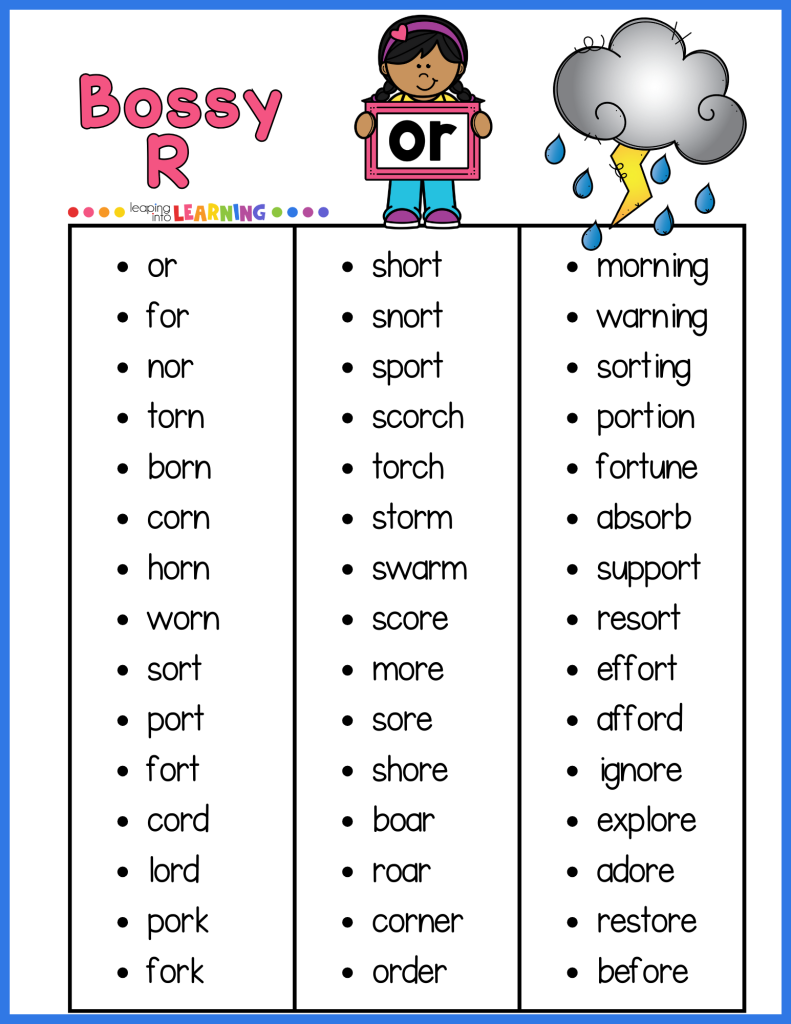
OR words spell the /or/ sound. These are usually easier than the “/er/” patterns.
Examples:
- corn
- fork
- storm
- horn
- short
How to practice OR words:
- Read and write them
- Map the word sounds
- Sort real vs. nonsense OR words
- Use flashcards or play word games
4. Teach Er words, Ir Words, and Ur Words

These are often the hardest because they all say the same sound: /er/ — but use different spellings. That’s confusing for many kids, so it helps to group them together.
Examples:
- ER words: her, tiger, butter
- IR words: bird, girl, swirl
- UR words: fur, turn, nurse
Practice ideas:
- Sort by spelling pattern (ER, IR, UR)
- Match pictures to words
- Highlight Bossy R patterns in simple decodable texts
You don’t have to teach all three at once — start with ER words, then IR, then UR.
5. Map the Words (Sound to Print)
Sound mapping helps your child understand how each sound connects to letters. This builds strong decoding and spelling skills.
Steps for mapping:
- Say the word out loud: “shark”
- Tap out the sounds: /sh/ /ar/ /k/
- Write one letter or letter pair for each sound
- Blend and read the word together
Do this with AR, ER, IR, OR, and UR words as your child learns each one.
Tips for R Words for Speech
If your child is working on R words for speech, keep it playful and pressure-free. These activities help build oral awareness while supporting reading:
- Say words together in front of a mirror
- Use silly tongue twisters with R words
- Practice a few R words during a daily routine (bath, snack, walk)
- Look for R sounds in books or signs around the house
The goal here isn’t perfection — it’s exposure, repetition, and confidence.
What to Do If Your Child Is Struggling
Bossy R patterns are tough for a reason — they break the usual rules. And it’s totally normal for kids to need extra time with them.
What helps:
- Focus on one pattern at a time
- Use visuals, hands-on practice, and word mapping
- Avoid memorizing — teach the sounds and how they’re spelled
- Use decodable books with controlled text – Check them out HERE!
- Celebrate every small win
Confidence grows with consistency — and your support makes all the difference.
You got this!
Teaching your child how to read R controlled vowels — like those in AR words, ER words, IR words, UR words, and OR words — is one of those things that seems complicated, but becomes easy with the right tools.
By focusing on one sound pattern at a time, using simple activities, and helping your child connect sounds to letters, you’ll build their decoding skills step by step.
You don’t need to be a teacher to make this work. You just need a few minutes, a little structure, and a whole lot of encouragement.