If you’re a parent wondering how to start teaching alphabet sounds at home — especially when you’re not a teacher — first of all: take a deep breath. You absolutely can do this. In fact, teaching letter sounds (see what I did there?) can be simple, playful, and even fun. And guess what? You don’t need a degree in education to get it right. Just a little guidance (hi, I’m here for you!) and some consistency. (WAIT – I’ve got a FREEBIE for you!)
So, let’s talk about what alphabet sounds are, why they matter way more than just singing the ABCs, and how to teach them in five easy, doable ways — without adding more to your already very full plate.
Why Are Letter Sounds So Important?
Knowing the names of the letters is great — but when it comes to learning to read, it’s the letter sounds that unlock the magic.
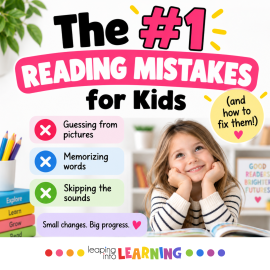
When your child sees the letter B and says “buh,” or sees S and says “sss,” they’re learning to connect the letters and sounds. This skill is called phonics, and it’s the foundation of reading. Memorizing words or guessing from pictures just won’t cut it — kids need to decode words, sound by sound. That’s why teaching alphabet sounds is one of the most powerful places to start.
And here’s the best part: you don’t need hours of worksheets or fancy materials. Let’s break it down into five bite-sized, practical tips.
1. Teach 2–3 Letter Sounds at a Time
Please don’t feel like you need to teach all 26 letters in a week! That’s overwhelming for everyone. Instead, focus on just 2–3 sounds at a time.
Start with the most common, easy-to-pronounce phonics sounds a to z, like m, s, a, or t. These sounds are continuous, which means kids can stretch them out easily (“mmmm” or “ssss”), and that helps them blend sounds together later when they start reading.
Once your child really knows those, then move on to the next few. Slow and steady wins the race here.

2. Teach Uppercase and Lowercase Letters Together
A lot of alphabet toys and books focus only on uppercase letters, but here’s the truth: kids need to know both. Most of the print they’ll see when reading is lowercase — so we want to make sure they’re learning uppercase and lowercase side-by-side.
You can say things like, “This is big A and this is little a. They make the /a/ sound like in apple!” Simple, clear, and helpful.

3. Use Hands-On Letter Sound Games
Kids learn best through play. And honestly? So do grown-ups.
Try letter sound games that get their bodies moving and their hands busy. A few of our favorites:
- Playdough letters: Make the letter, say the sound, then smash it!
- Jump on the sound: Tape letters to the floor and have your child jump on the right one when you say the sound.
- Mystery bag: Fill a bag with objects that start with the sound you’re working on (like “s” – sock, spoon, spider). Pull one out and say the sound together.
Need more easy, hands-on activities? Check out our Alphabet Bundle with low-prep games and printables that make learning the letters and sounds feel like play.

4. Repeat. Then Repeat Again. (And Again.)
Repetition is your secret weapon. Kids need to hear, say, and see letter sounds many, many times before they stick.
It’s totally normal if they forget a sound you just taught yesterday. Just keep practicing through songs, games, bedtime stories — anywhere you can naturally slip in a little sound review.
Quick tip: Keep a little pile of 2–3 letters you’re working on by the couch, in the car, or at the breakfast table. A 30-second review here and there adds up!

5. Keep It Light and Encouraging
This might be the most important part. When you’re teaching letter sounds at home, keep the tone light, playful, and full of praise. Your child doesn’t need perfection — they need your encouragement.
Celebrate the small wins. Smile when they guess a sound (even if it’s wrong), and say, “That’s a great try! This one makes the /s/ sound like in snake. Let’s try it together!”
You’re not just teaching them to read — you’re helping them feel confident about learning. That’s everything.
Grab Your Free Letter Sounds Checklist!
To make this even easier, I’ve made a free Letter Sounds Checklist for you! It includes all 26 letter sounds (not the names — the actual sounds), plus space to check off when your child can:
- Recognize the letter
- Say the correct sound
- Match it to a keyword (like “Bb” for B – ball)
This is a super simple tool to keep track of what your child knows and what to review — all at a glance!

You’ve Got This, Friend
Teaching alphabet sounds doesn’t have to feel overwhelming. Start small, stay consistent, and make it fun. Whether your child is just beginning to explore the alphabet or you’re reviewing the phonics sounds a to z, your efforts are planting seeds that will grow into confident, capable reading.
And remember: you don’t need to be a teacher to teach your child to read. You just need to show up with love, patience, and maybe a little playdough.
Let’s do this together! xx Kaley