

Helping your child learn to read can feel overwhelming—especially when everything sounds technical. But don’t worry! If you have a kindergarten reader at home, simple tools like phonics books and word blends can make a big difference. These are building blocks that help your child move from sounding out individual letters to reading real words with confidence—no teaching background needed.
What Are Word Blends?
Word blends, also called consonant blends, are groups of two or three consonants that appear together in a word while each letter still keeps its own sound.
For example:
- fr in frog is a word blend — you hear both /f/ and /r/.
- bl in blue is another — you hear both /b/ and /l/.
These blends often appear at the beginning of words (like st in stop), but they can also be at the end (like nd in hand).
Learning these patterns is important for kids because it helps them decode (sound out) more complex words in reading — a crucial step on the path to fluency and confidence.
Why Word Blends Matter for Early Reading
In the journey from simple phonics to real reading, blends are one of the next big steps after your child learns single letter sounds. When kids can recognize and blend letters like br, cl, or st, they begin to understand how reading works — and that words aren’t just something to guess, they are something to decode.
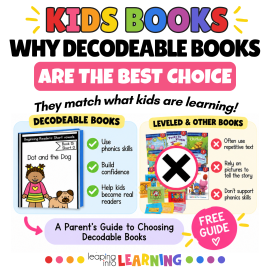
Using decodable readers kindergarten materials — like structured phonics books that focus on blends — gives children repeated practice with blends in real text, which makes learning stick. Reading real words (not just flashcards) helps them build confidence and fluency.
Examples of Common Letter Blends
Here are some beginning blends your child might start practicing:
R Blends: br (bread), fr (frog), tr (tree)
S Blends: st (star), sl (slip), sw (swim)
L Blends: bl (blue), cl (clap), fl (flag)
Having a consonant blends word list can be a great resource to keep handy for practice, games, and reading.

Fun Ways to Teach Word Blends at Home
You don’t need worksheets or a teaching degree to make learning blends engaging. Here are some playful, research-based strategies that parents can try at home:
Picture Sorting Games
Print or draw pictures of words with blends (like frog, truck, plate), then have your child sort them by the beginning blend (bl, fr, pl). This builds phonemic awareness and strengthens sound-letter connections.
Word Mapping Activities
Word mapping is one of the most effective ways to teach kids to read using phonics books for beginners.
Here’s how to do it:
- Say a word aloud (e.g., slip).
- Have your child tap out each sound: /s/ /l/ /ĭ/ /p/.
- Draw sound boxes and write each sound in a box.
- Highlight the blend (sl) to show it’s two sounds blended together.
This helps develop orthographic mapping, which is how kids store words in memory for fluent reading and spelling. You can even use this technique alongside your decodable readers kindergarten materials for consistent practice.
Word Hunts Around the House
Write blend words on sticky notes and hide them around the house. When your child finds a word, have them sound it out and blend it aloud. This builds decoding fluency while keeping things playful.
Read with Decodable Readers Kindergarten
Using phonics readers designed for beginners gives your child real practice in reading sentences that feature consonant blends and short vowel words. These types of phonics books build reading confidence, especially for kindergarten readers and kids who need extra reading help in 1st grade. Check them out HERE
Free Consonant Blends Word List
Want a quick resource to support your child’s learning at home?
Download my free consonant blends word list here!
Use it for sorting games, reading practice, or word mapping activities at home.
Making Blends Click
Blends aren’t a separate, confusing math problem — they’re just partners working together to help your child read more smoothly. With playful activities and the right phonics readers at home, your child can go from sounding out letters to blending whole words with confidence.
Whether your child is just mastering beginning blends or ready to move into longer words, learning these letter sounds and how to blend them opens the door to reading success.
Shop This Post

Reading Library – Stage 2
$14.95
21 books to practice the SAME skills they’re learning!
- 21 books + reading activities
- Practice Digraphs, Blends + Magic E
- Print them or read on a tablet
- Made to use right alongside Word Builders
- With busy parents in mind!




Leave a Comment
You must be logged in to post a comment.