
Teaching your child to read is one of the most rewarding experiences, but it can also be challenging. Many parents wonder how to best support their child’s reading journey WITHOUT resorting to memorization techniques like sight words. Here are five practical strategies to help your kids learn to read in a way that builds a strong foundation and fosters a love for reading.
1. Choose Decodable Books
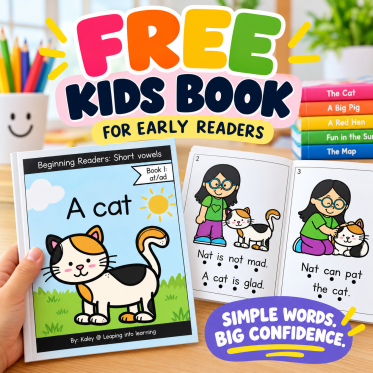
Decodable books are designed to align with a phonetic code, making them an excellent choice for early readers. These books use a controlled vocabulary that adheres to specific phonetic patterns, allowing children to apply their knowledge of letter sounds and blend them together to form words. This approach helps build confidence and reinforces phonics skills, as kids are not relying on guessing or memorization but are actually decoding the text.
Tip: Start with simple decodable books that match your child’s current phonics knowledge. As they become more proficient, gradually introduce more complex books to challenge and expand their skills.
2. Follow with Their Finger
Encourage your child to use their finger to follow along as they read. This simple yet effective technique helps children stay focused on the text and improves their tracking ability. By guiding their finger under each word, they can visually connect the letters and sounds, enhancing their decoding skills and fluency.
Tip: If your child finds it difficult to keep their finger steady, you can use a reading strip or a ruler to help them stay on track. This tool can make the process less frustrating and more enjoyable.
3. Orthographically Map Words
Instead of guessing words from pictures, teach your child to orthographically map them. This means breaking down words into their individual sounds and understanding how these sounds correspond to letters and letter patterns. By focusing on the structure of words, children develop a deeper understanding of spelling and reading.
Tip: Practice orthographic mapping by using THESE worksheets or writing out words and asking your child to map them out. This exercise helps reinforce the connection between phonemes (sounds) and graphemes (letters).
4. Model Fluent Reading
Children learn a lot by observing and imitating. When you read aloud to your child, you model what fluent reading sounds like. This includes appropriate pacing, expression, and intonation. By listening to you, your child learns how to bring stories to life and understands the natural rhythm and flow of language.
Tip: Choose books with engaging stories and rich language to read aloud. Pause occasionally to discuss the plot, characters, and any difficult words. This interaction not only models fluent reading but also enhances comprehension and vocabulary.
5. Blend Words Together
Blending is a crucial skill for early readers. Help your child practice by stretching out the sounds in words and then blending them back together. For example, you can say the sounds slowly, like “c-a-t,” and then quickly blend them to say “cat.” This technique reinforces the phonetic structure of words and helps children become more proficient at decoding.
Tip: Make blending a fun and interactive activity. Use magnetic letters, letter tiles, or even your fingers to represent different sounds. Encourage your child to experiment with blending different sounds and words, turning it into a playful learning experience.
Final Thoughts
Teaching your child to read is a journey that requires patience, encouragement, and the right strategies. By focusing on phonetic principles, guiding them with visual aids, and modeling fluent reading, you can create a strong foundation for your child’s reading success. Remember to celebrate their progress and make reading a joyful part of your daily routine. Let me know if you have any questions! Come say hi on Instagram



Leave a Comment
You must be logged in to post a comment.