
If you’ve ever searched for sight words for kindergarten or printed out a giant list of words for your child to memorize, you’re definitely not alone.
For years, parents have been told that kids need to memorize sight words. Grab some flashcards, practice them over and over, and eventually the words will “stick.”
But that’s not actually how we want kids learning to read.
Kids don’t need to memorize words like pictures. They need to learn how words work.
Instead of trying to remember the shape of a word, we want kids to connect the sounds they hear in a word to the letters that spell those sounds. This is called word mapping, and it’s a much better way to help words stick.
So, What Are Sight Words?
The term sight words can be really confusing because it makes it sound like these are special words kids need to memorize by sight.
They aren’t.
When a reader knows a word automatically, it’s because that word has become stored in their memory. They no longer have to stop and carefully sound it out every time they see it.
But that doesn’t mean they learned it by staring at it, memorizing its shape, or practicing it on a flashcard 50 times.
The brain connects the sounds in the word with the letters that represent those sounds. Over time, that connection becomes so strong that the reader can recognize the word almost instantly.
The technical term for this process is orthographic mapping.
Sounds very teacher-y, I know. But what you need to know as a parent is simple:
Your child’s brain is connecting the sounds in a word to its spelling so that word becomes easier and easier to read.
That’s very different from memorizing what a whole word looks like.
What About High Frequency Words?
This is another term that often gets mixed up with sight words.
High frequency words are simply words that show up frequently in books and everyday reading. Words like the, said, was, you, and have.
Because kids see these words so often, they frequently end up on sight word lists. And that’s where the advice to “just memorize them” usually starts.
But a word appearing frequently doesn’t mean your child has to memorize it.
Many high frequency words can be read using the phonics patterns your child is learning. And if part of a word is unexpected, we can teach that part instead of treating the entire word like one big thing to memorize.
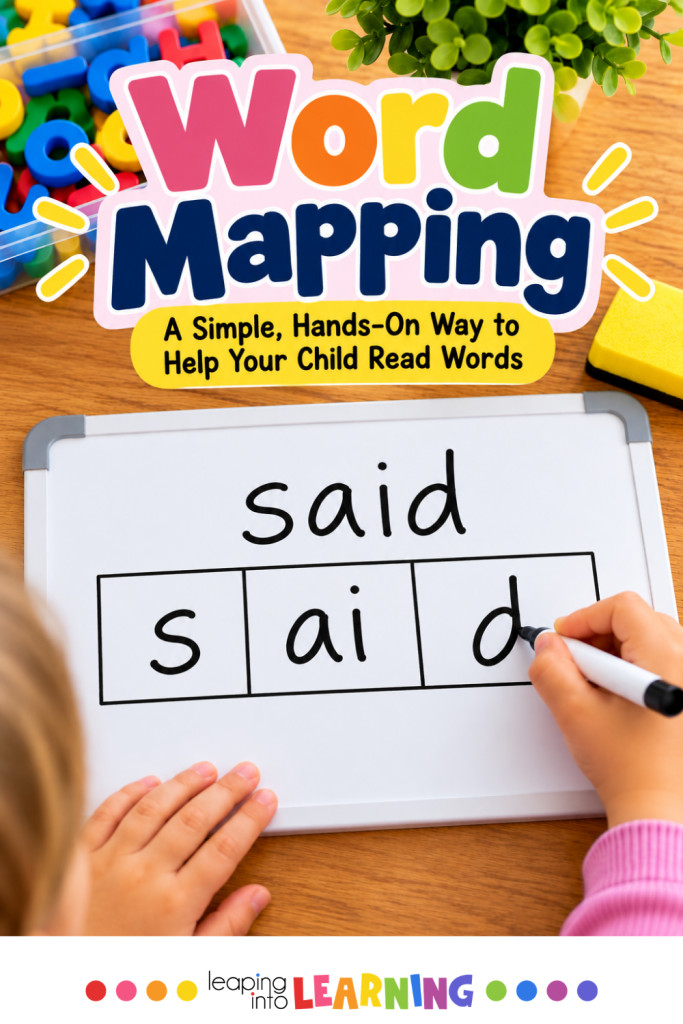
- Take the word said.
- We hear three sounds:
- /s/ /ĕ/ /d/
- The s represents /s/, and the d represents /d/. The unexpected part is ai, which represents /ĕ/ in this word.
Instead of telling your child, “This says said. Just remember it,” we can show them how the word works.
Now they have something meaningful to connect to the spelling.
Less guessing. Less memorizing.
Word Mapping Helps Kids Understand How Words Work
This is where word mapping comes in.
Word mapping helps your child connect the sounds they hear in a word to the letters they see.
Take a simple word like map.
- Say map slowly and you can hear three sounds:
- /m/ /ă/ /p/
- Then we connect those sounds to their spellings:
- m – a – p
Your child isn’t trying to memorize what map looks like. They’re learning why those letters spell map.
As kids learn more letter-sound relationships and spelling patterns, they can do this with more and more words. With practice, those words become stored in memory and reading them becomes fast and automatic.
That’s orthographic mapping at work.
And it’s why strong phonics instruction is so important. We’re not trying to fill your child’s brain with hundreds of individually memorized words. We’re giving them the tools to figure out how words work.
What About Sight Words for Kindergarten or Preschool?
If you’ve been given a list of sight words for kindergarten, you don’t necessarily need to throw it away.
I’d just change how you use it.
Instead of holding up a word and asking your child to remember what it looks like, help them listen to the word first.
Say the word. Stretch it out. Listen for the sounds. Then look at the letters and help your child connect those sounds to the spelling.
If there’s an unexpected part, point it out.
The same goes if you’re looking for sight words for preschool.
Before worrying about how many words your preschooler can recognize on a flashcard, focus on the skills underneath reading: hearing sounds in words, learning letter sounds, and beginning to understand that the letters on the page represent the sounds we say.
Those skills give your child something they can use again and again.
Memorizing a list only helps them with the words on that list.
Skip the Memorizing. Show Them How the Word Works.
So if another sight word list comes home in your child’s backpack, don’t panic. And please don’t feel like you need to spend your evening drilling 50 flashcards at the kitchen table.
- Start with the word.
- What sounds do you hear?
- Which letters spell those sounds?
- Is there a part that’s unexpected?
That small shift takes reading practice from “Remember what this word looks like” to “Let’s figure out how this word works.”
And that’s what we want kids learning to do.
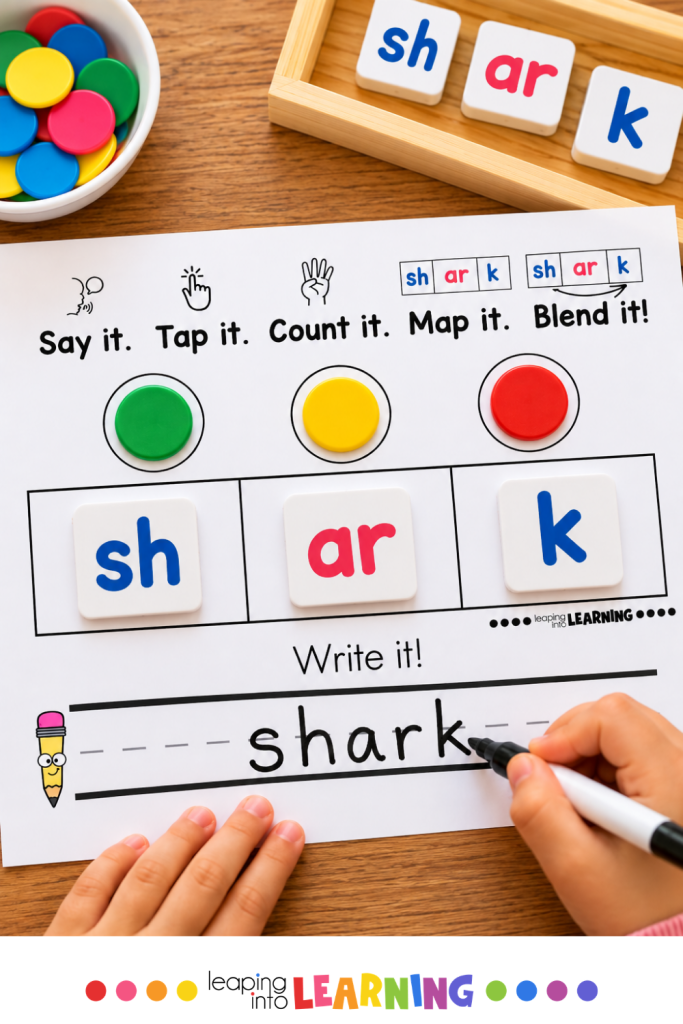
If you want to try word mapping with your child, grab my free Word Mapping Mat here.
It gives you a simple way to help your child hear the sounds, connect them to the letters, and practice words without relying on memorization.
Less guessing. Less memorizing. More understanding how words work.




Leave a Comment
You must be logged in to post a comment.