If you’re starting your child’s reading journey, understanding short vowels is one of the most important first steps. These short vowel sounds are the foundation of reading, and once kids understand these vowel sounds, everything starts to click into place.
Let’s break down short and long vowels in a way that feels simple, doable, and (honestly) really encouraging.
Short and Long Vowels (What’s the Difference?)
Before we jump into teaching, it helps to understand Short and long vowels.

- Short vowels say their sound
- a → /a/ as in apple
- e → /e/ as in egg
- i → /i/ as in igloo
- o → /o/ as in octopus
- u → /u/ as in umbrella
- Long vowels say their name
- a → /ā/ as in cake
- e → /ē/ as in see
- i → /ī/ as in bike
- o → /ō/ as in home
- u → /yū/ as in cute
If you’ve ever searched for a Long and short vowels sounds list, this is exactly what you’re looking at—two sounds for each vowel.
Why We Teach Short Vowels First
Here’s the key (and this is backed by science of reading research):
We start with short vowels because these short vowel sounds are:
- More consistent
- Easier to hear
- Easier to blend into words
When kids learn short vowels first, they can quickly read simple words like cat, bed, sit, hop, sun. That early success builds confidence—and confidence keeps kids going.
Short Vowel Sounds:
Let’s walk through each short vowel sound. Keep it light—just a few minutes a day is more than enough.
Short A Sound
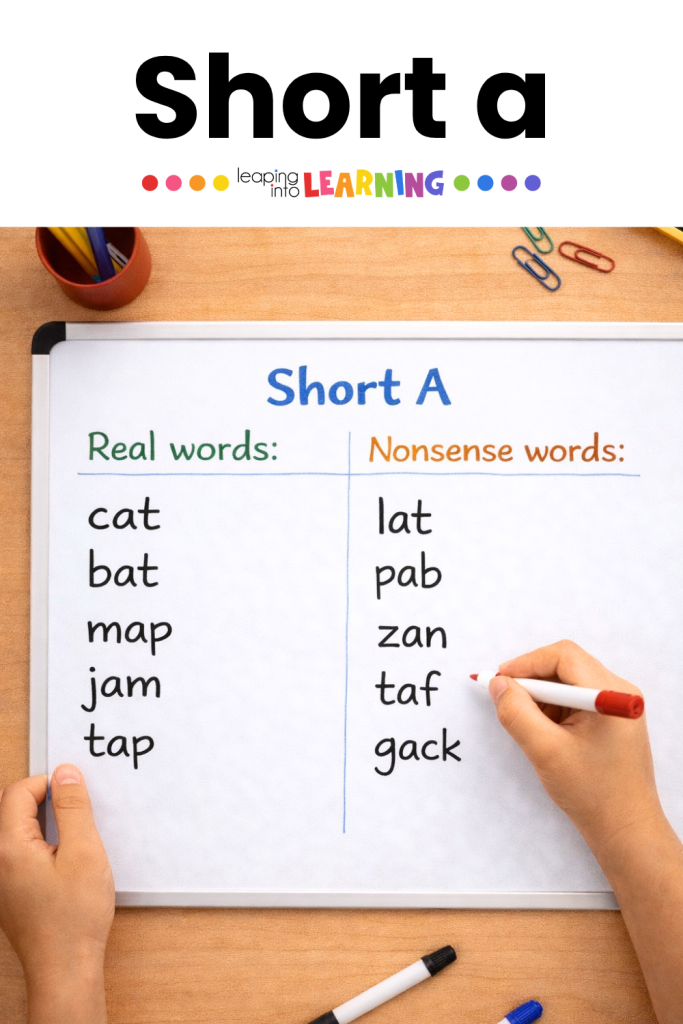
The Short a sound is /a/ like in apple.
Real words:
- cat
- bat
- map
- jam
- tap
Nonsense words:
- lat
- pab
- zan
- taf
- gack
Short E

The Short e sound is /e/ like in egg.
Real words:
- bed
- red
- hen
- net
- pen
Nonsense words:
- teb
- seg
- len
- gep
- ved
Short I

The Short I sound is /i/ like in igloo.
Short I words (real):
- sit
- pin
- lid
- big
- dip
Nonsense words:
- kib
- mip
- lin
- sig
- tiv
Short O
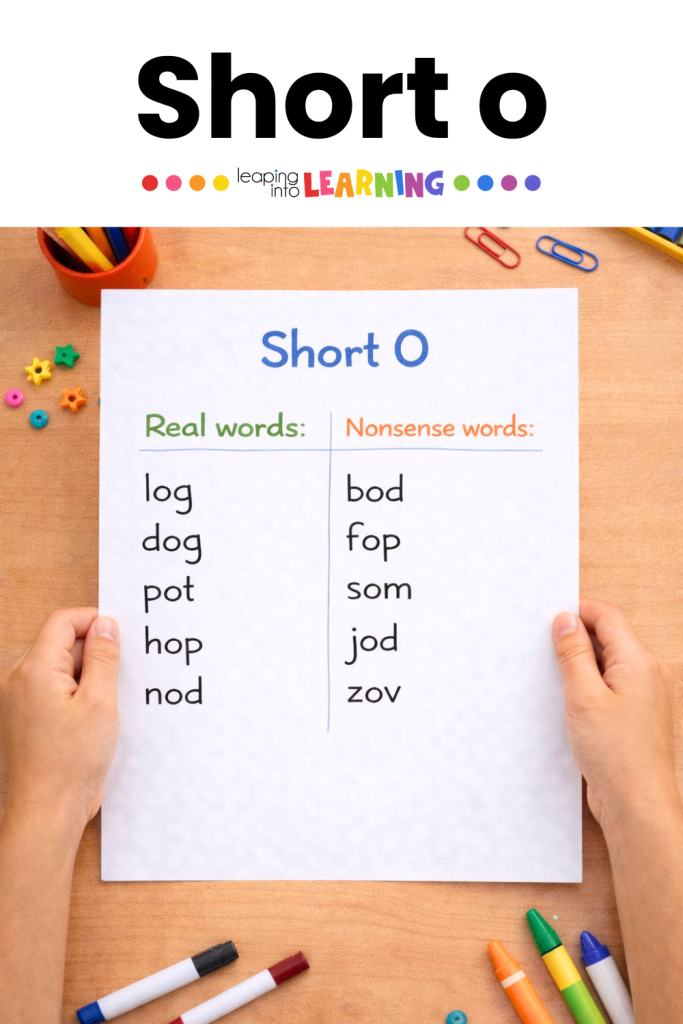
The Short o sound is /o/ like in octopus.
Real words:
- hot
- mop
- log
- top
- cot
Nonsense words:
- lon
- mog
- pob
- sot
- lod
Short U
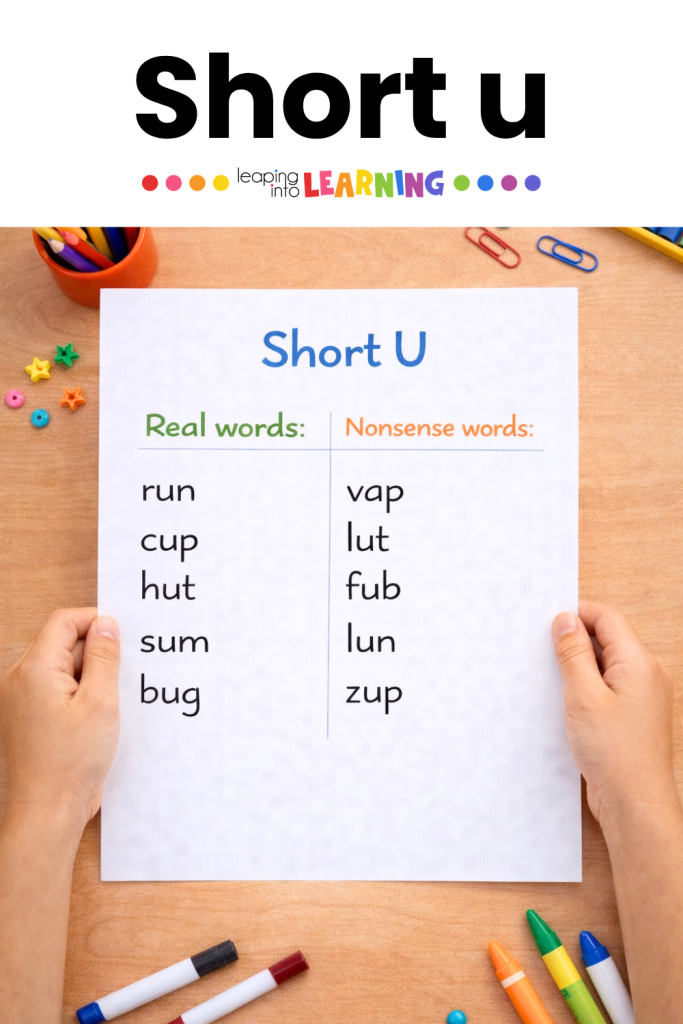
The Short u sound is /u/ like in umbrella.
Real words:
- sun
- cup
- bug
- mud
- run
Nonsense words:
- yug
- mup
- nub
- tuf
- rud
Why Nonsense Words Matter
I know—they feel a little silly, but they’re incredibly helpful.
Nonsense words help your child:
- Focus on short vowel sounds
- Strengthen decoding (instead of guessing)
- Build strong, flexible vowel sounds skills
How to Practice Short Vowels at Home
You don’t need anything fancy to practice short vowels.
Try this:
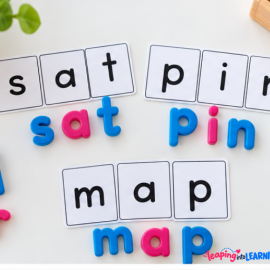
- Say a word slowly: c-a-t
- Have your child blend it: cat
- Switch one sound: m-a-t → mat
Just 5 minutes a day practicing short vowel sounds is enough to make a big difference.
Using Books to Build Confidence
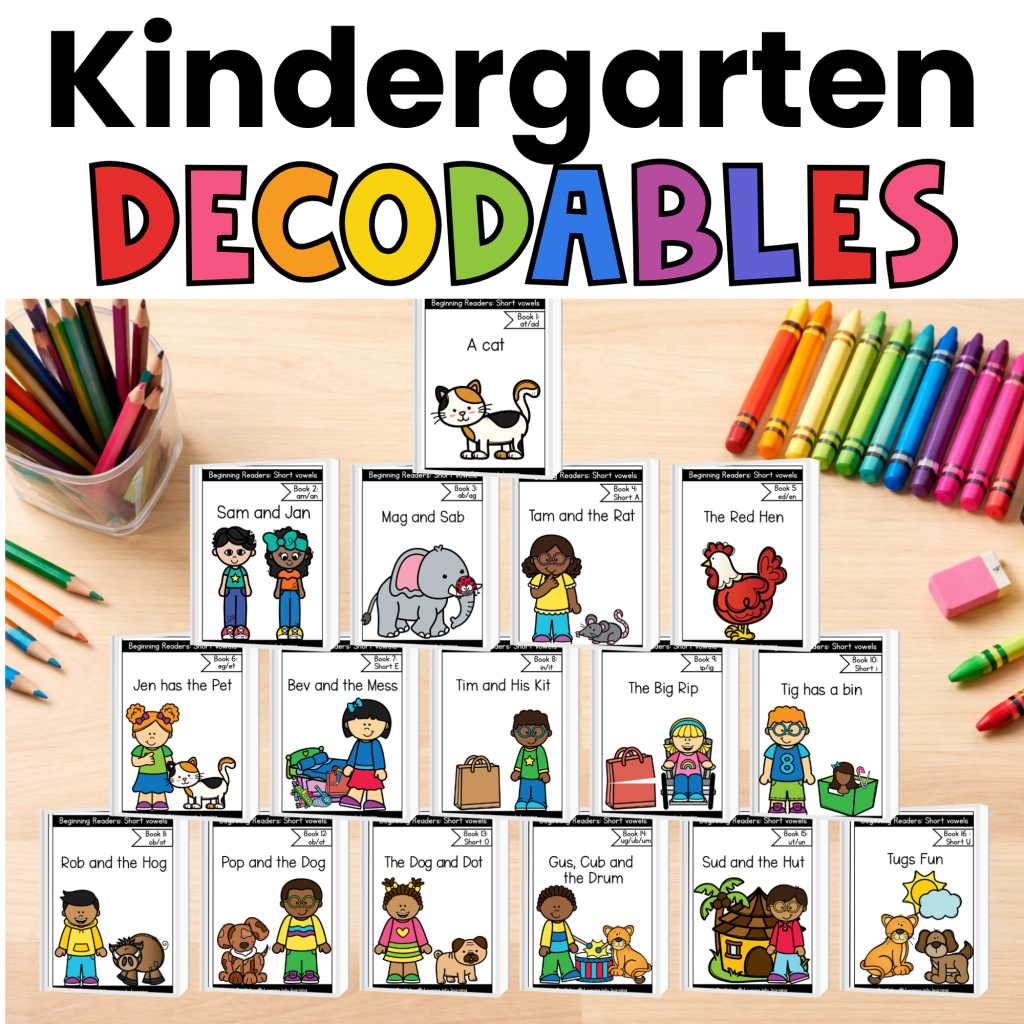
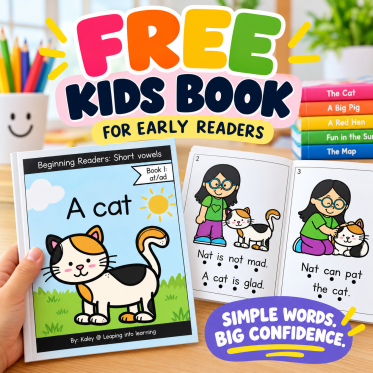
Once your child understands short vowels, it’s time to apply those skills in real reading.
This is where Early reader books and Beginner reading books come in.
Decodable books are especially powerful because they:
- Focus on specific short vowel sounds
- Let kids practice real reading (not guessing)
- Build confidence quickly
I recommend starting with your decodable readers here!
These are perfect Beginner reading books that align with how kids actually learn to read.
A Final Encouragement
If your child is still learning, that’s okay.
Reading is a step-by-step process, and focusing on short vowels and strong vowel sounds gives them the best possible start.
You don’t need to do everything—just start here, keep it simple, and trust the process.
You’ve got this!